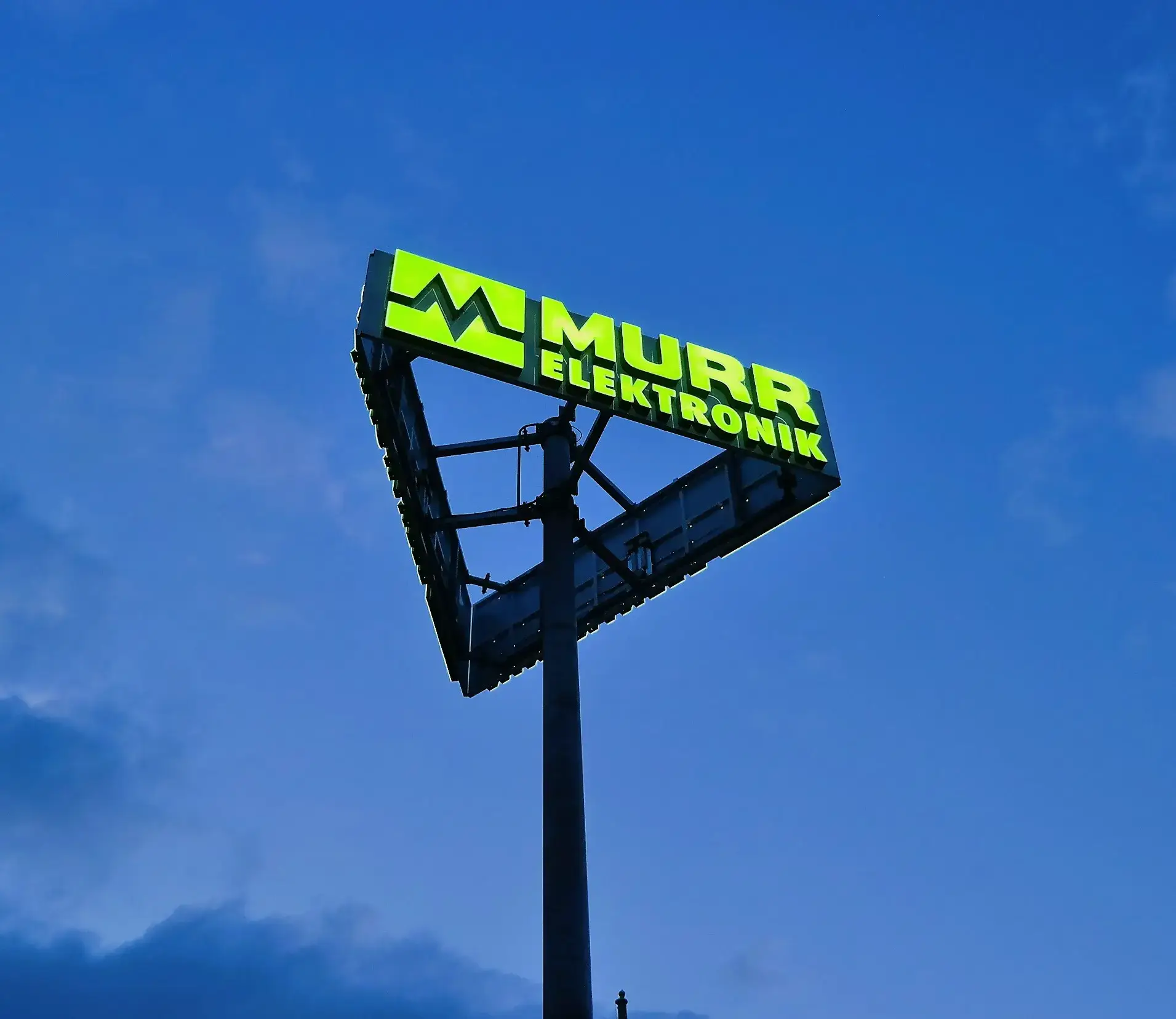
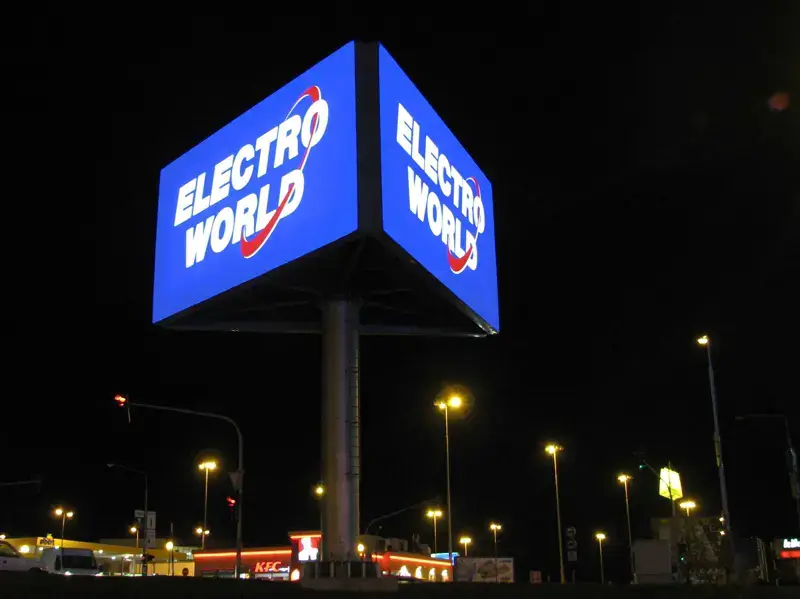
Advertising pylons and totems: when the investment pays off (and when it doesn't)
Advertising pylon or totem: when does the investment pay off, and when not? A guide for businesses that want their premises seen from the main road.

A pylon is a large, free-standing advertising structure. Customers see it before they even turn off. You will find them at petrol stations, shopping centres and industrial estates. They are expensive. And yet for many businesses they have turned out to be the best advertising decision they ever made.
When an advertising pylon makes sense
Your premises cannot be seen from the main road
This is the most common reason for getting a pylon. Customers simply cannot find a building on a side street, in an industrial estate or around the corner. A pylon at the entrance or by the main road acts as a signpost before the customer knows exactly where to turn.
You share a site with other businesses
Mixed-use buildings, industrial parks, retail zones: finding your way around them is complicated for customers. Your own pylon with your logo makes you stand out from the crowd.
You need to be visible from a distance
Pylons can be designed at heights of 2–40 metres. Illuminated versions are visible at night and in bad weather. For petrol stations, hotels and larger shops, they are a key element. Without one, customers simply drive past.
When the investment does not make sense
A pedestrian zone in the town centre, densely built-up surroundings, buildings or trees that would hide the pylon. In these cases, your money will not be well spent.
Also factor in permits. A pylon above a certain height requires a building permit and consent for the placement of an advertising structure. The procedure varies from municipality to municipality. But you do not have to deal with it yourself: we have many years of experience with the legislation across the Czech Republic and in neighbouring countries, and we will handle the permits on a turnkey basis.
What affects the price of an advertising pylon?
- Height and structural design (a simple totem or an 8-metre steel structure)
- Lighting (non-illuminated, LED backlighting, full-colour LED display)
- Number and size of advertising surfaces
- Installation method (concrete foundation, anchoring)
- Sharing with other tenants on the site
Prices vary widely. An accurate quotation requires a site survey and agreement on the specific parameters.
How do you design a pylon properly?
The most common mistake is lettering that is too small or a surface that is overcrowded. A pylon speaks to drivers travelling at 50–90 km/h. They have 2–3 seconds to read it. Logo, name, one key piece of information. Less is more.
[banner:pylony-lokalita-maly]

Základní fotogalerie